Categories
Web Design

10 Benefits of a Business Website in 2026

The benefits of a business website go far beyond looking professional. A good website gives customers a place to verify your business, understand what you offer, find you through search, and take the next step. It also gives you more control over your content, customer journey, and long-term digital presence.

A website is not magic, though.

The real business website benefits come from how well the site supports discovery, credibility, and action.

Putting five pages online will not automatically bring leads through the door. What matters is whether those pages make your business easier to find, understand, trust, and contact.

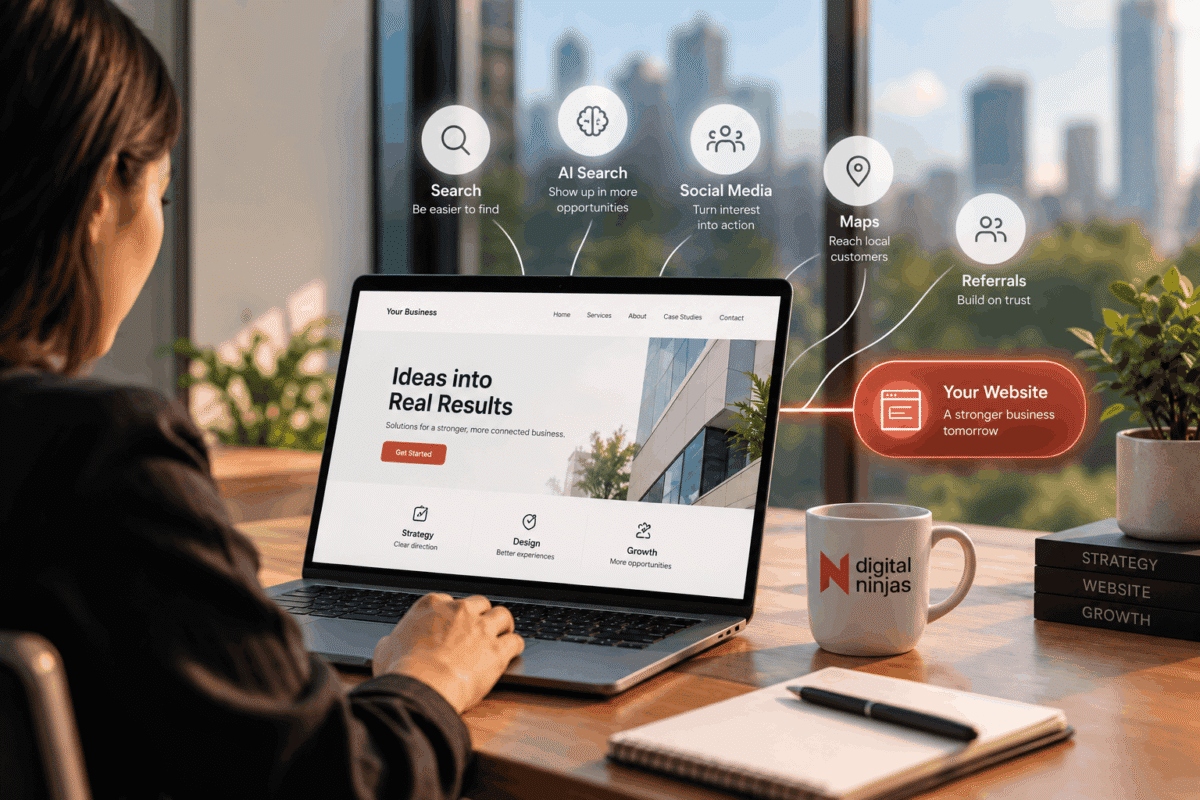
That distinction matters even more in 2026 because people are no longer discovering businesses through one channel. Search, social media, maps, referrals, review platforms, and AI-powered search can all play a part.

Your website is where those paths can come together.

We see this fairly often: a business can look active online and still make potential customers work too hard to understand what it actually offers.

So what does a business website actually do for you?

What Are the Benefits of a Business Website?

The main benefits come down to visibility, trust, control, and making it easier for potential customers to understand and contact your business. The ten points below show how those benefits play out in practice.

1. It gives customers a place to verify your business

Before someone contacts you, there is a good chance they will check you out first.

They may have discovered you through a referral, an Instagram post, a Google search, an ad, or even a conversation with someone else. But discovery and trust are two different things.

Your website gives them somewhere to confirm the details.

Who are you? What do you do? Who do you work with? Where are you based? Can they see examples of your work? Is there a clear way to contact you?

For a service business, those answers may live across your homepage, service pages, About page, case studies, testimonials, and contact page. For a retailer, they may include product information, delivery details, returns, and support.

The point is not simply to “look professional.”

It is to remove doubt.

A polished logo and a good social presence help. But credibility becomes much stronger when customers can find actual evidence behind the business.

2. You have more control over the platform

Your social profiles are useful, but you operate within somebody else’s platform.

The layout is theirs. The algorithm is theirs. The rules are theirs. Features and reach can change. Accounts can be restricted.

A website gives you considerably more control over how your business is presented.

You decide which services deserve their own pages. You decide what visitors see first. You choose how much detail to provide, where calls to action appear, and how someone moves from learning about you to contacting you.

That does not mean a website is completely independent. You still rely on a domain registrar, hosting provider, software, and other services.

But compared with a social profile or marketplace listing, it is the digital channel where your business has far more control over the experience.

That level of control is one of the strongest reasons to have a business website rather than relying entirely on third-party platforms. That makes it a much stronger long-term foundation.

3. It helps more people discover your business

Your website can create opportunities to be found by people who have never heard of your business.

That is one of the biggest benefits of having a website for your business.

Search engines can index individual pages about your services, locations, products, questions, and expertise. A single social profile cannot give every topic the same depth.

The potential audience is enormous. DataReportal reported that 6.12 billion people were using the internet worldwide at the start of April 2026, representing 73.8% of the global population. But search itself is also changing.

In 2026, Google reported more than 2.5 billion monthly active users for AI Overviews, while AI Mode had surpassed one billion monthly users. Google has also continued adding links and website discovery features to its AI search experiences.

That does not mean publishing a website guarantees an appearance in AI-generated results.

It means the web is still an important source these systems can discover, interpret, and link to.

A clear website gives your business pages that can explain what you do in far more detail than a short profile or bio ever could.
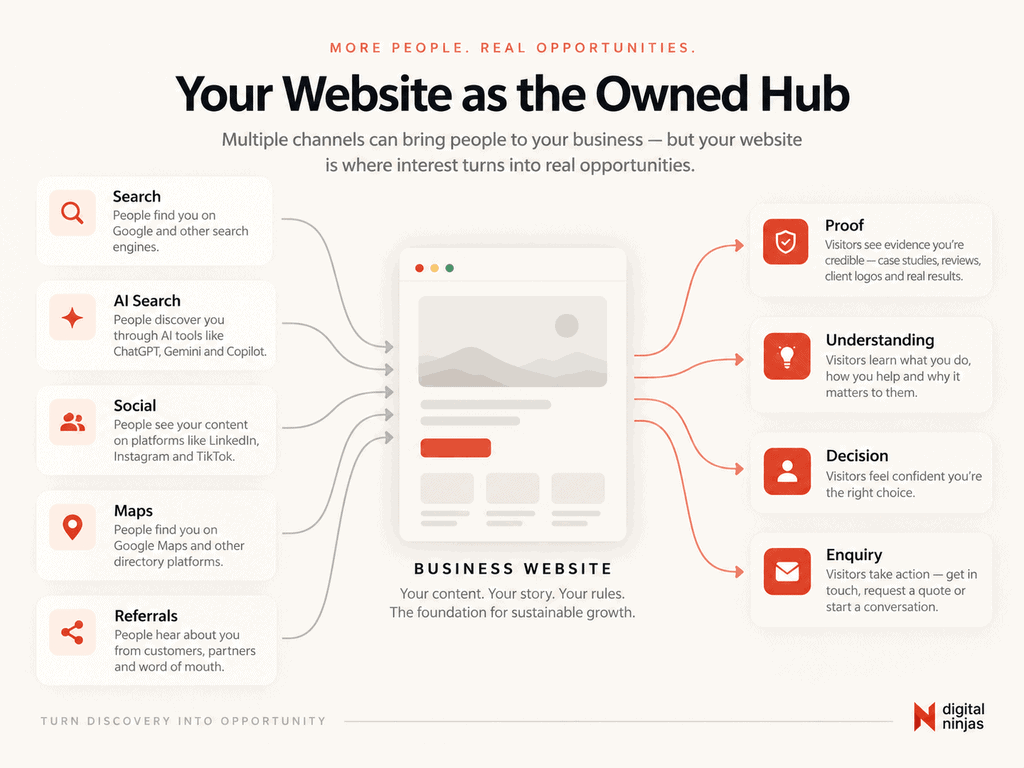
Business website connecting search, AI search, social media, maps and referrals to customer enquiries

4. You can explain your offer properly

Some businesses are easy to understand in five seconds.

Others are not.

If you provide multiple services, work with different types of clients, have a longer sales process, or sell something customers need to think about before buying, a few lines in a social bio will rarely be enough.

One of the clearest benefits of having a website for your business is having enough room to explain what you do without squeezing everything into a short profile or post.

Your website gives you space to answer the questions people actually have.

A dedicated service page can explain what is included, who the service is for, how the process works, what problems it solves, and what happens next.

You can show work samples and answer common objections. You can explain technical subjects without forcing everything into one massive caption.

And because different services can have different pages, visitors do not need to dig through content that has nothing to do with what they came for.

Good websites make complex businesses easier to understand.

5. It helps customers decide whether you are the right fit

Getting traffic is not the same as getting the right enquiry.

A useful website helps potential customers answer a few basic questions before they ever contact you:

Do you provide what I need?

Do you understand businesses like mine?

Can I trust you?

What will working with you involve?

What should I do next?

This is where website design and content have to work together.

A beautiful site that says very little can still leave people confused. A page packed with information can fail for the opposite reason if visitors cannot find what matters.

The goal is clarity.

That clarity is one of the benefits of a business website that is easy to underestimate. A good site does part of the explanation before a sales conversation ever begins.

Someone should not need to read every page before they understand what your business does and whether it might be relevant to them.
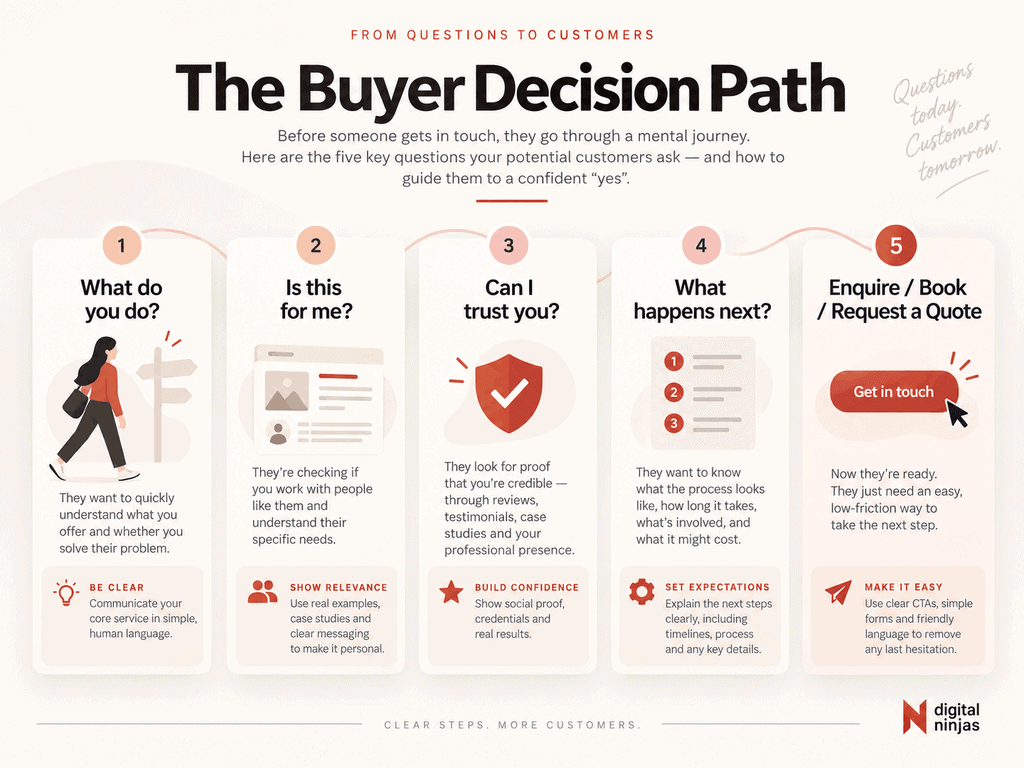
Customer decision journey from understanding a business to making an enquiry

6. It can generate enquiries even when you are not available

Your website does not need to close a sale by itself.

Often, its job is simply to make the next step easy.

That might mean:

  • requesting a quote
  • booking a consultation
  • calling your business
  • sending an enquiry
  • joining an email list
  • downloading a guide
  • buying a product
  • scheduling an appointment

A customer can do that at 2:00 in the afternoon or 2:00 in the morning.

You still need to follow up properly, of course. A form is not a replacement for good customer service.

But it removes unnecessary friction between interest and action.

The better question is not, “Does my website have a Contact page?”

It is, “Can a potential customer tell exactly what to do next?”

7. It gives you better information about your audience

When people interact with your own website, you can learn much more about what attracts their attention.

With the right analytics and privacy setup, you can see things such as which pages receive traffic, how visitors reached the site, which content gets viewed, and where conversions take place.

That information can influence real business decisions.

Perhaps one service consistently attracts more organic search traffic.

Perhaps a guide keeps bringing in visitors months after publication.

Maybe people reach a pricing page but rarely continue to the enquiry stage.

Those signals do not tell you everything about a person, and analytics should never be treated as mind-reading, but they do give you evidence.

Access to that evidence is one of the reasons to have a business website. Social profiles alone cannot fully replace the insight you can get from your own site.

That is far more useful than making every marketing decision based on instinct.

8. It makes your other marketing channels more useful

A website does not need to compete with your social media, email marketing, advertising, or sales outreach.

It can make all of them stronger.

An ad can lead to a page built specifically around the offer being advertised.

A social post can send someone to a detailed guide.

An email can link to a case study.

A sales conversation can be followed by a relevant service page.

SEO has pages to rank.

A Google Business Profile has somewhere useful to send visitors who want more information.

This is one of the broader business website benefits: it can support nearly every other part of your marketing rather than operating as a standalone tactic.

It gives the rest of your digital activity somewhere to land.
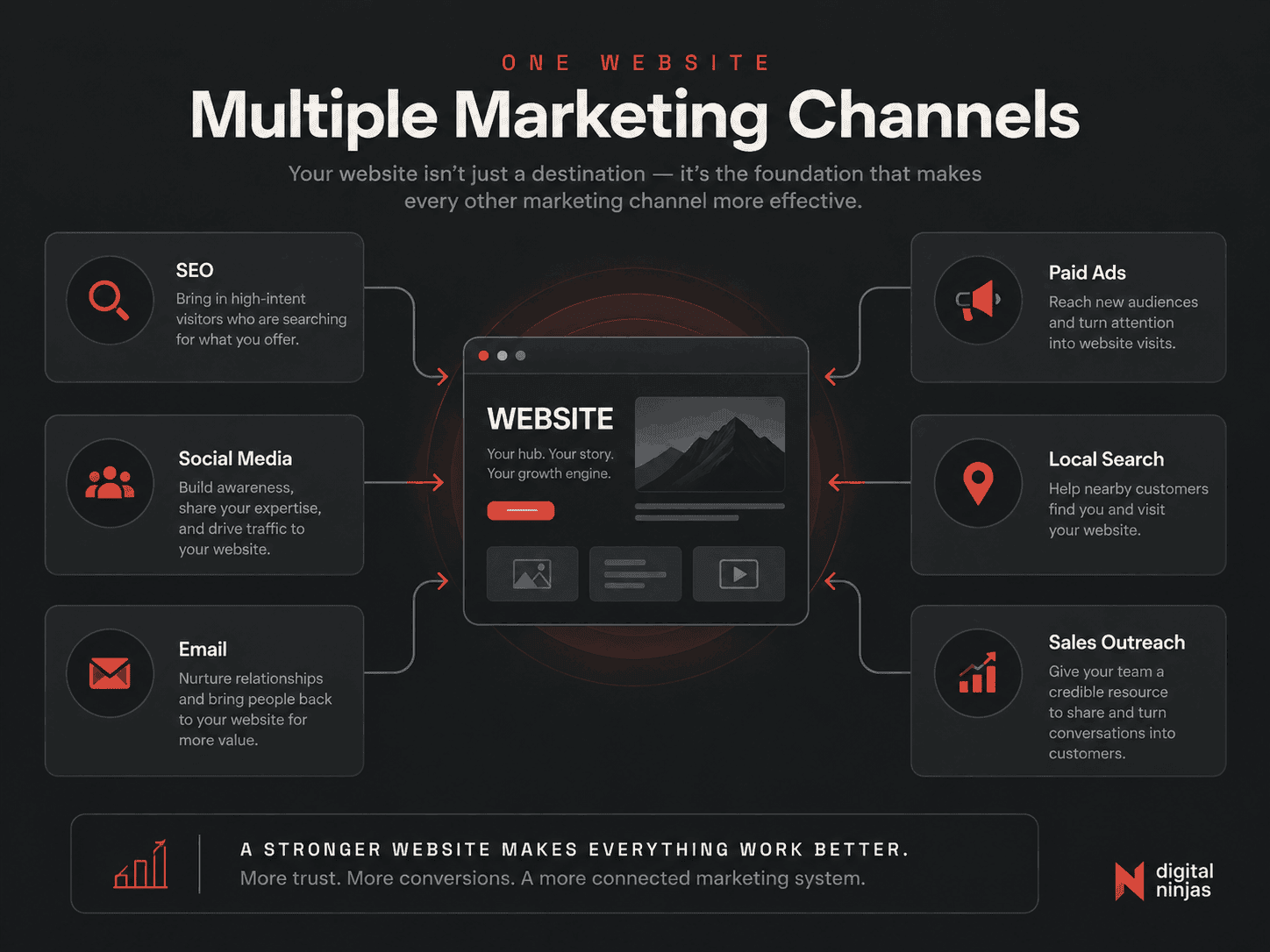
Business website supporting SEO, social media, email, advertising, local search and sales outreach

9. Your website can grow with the business

Your first website does not need every feature you might eventually use.

A small business may start with five core pages.

Later, the same digital presence might expand to include:

case studies, location pages, resources, online booking, ecommerce, lead magnets, integrations, a careers section, landing pages, or a larger content library.

That is a much more useful way to think about scalability than simply saying you can “customize your website.”

Scalability is another one of the practical reasons to have a business website. A well-planned site can evolve with the company instead of being rebuilt from scratch every time your needs change. What you need today will probably not be identical to what you need three years from now.

The important part is choosing the right foundation for where the business is going, rather than paying for complexity you do not need yet.

10. It reduces your dependence on platforms you do not control

This is closely related to ownership, but the business implication deserves its own section.

If every enquiry comes from one social network, marketplace, directory, or advertising platform, that platform has enormous influence over your pipeline.

A website gives you another route.

People can find you directly. Existing customers can return to you. Referral partners have somewhere permanent to send prospects. Your content can accumulate over time instead of disappearing into a feed.

Your website is not guaranteed to last forever. Domains expire, hosting changes, technology becomes outdated, and websites still need maintenance.

But it is an asset you can migrate, rebuild, improve, and continue developing.

That is very different from building your entire online presence inside somebody else’s account.

Do you need an expensive website to get these benefits?

No.

And expensive does not automatically mean good. The right website depends on what your business needs it to accomplish.

A solo consultant who mainly receives referrals may need a relatively simple site. A growing service business targeting competitive search terms may need considerably more content and SEO work. An ecommerce company has another level of technical requirements altogether.

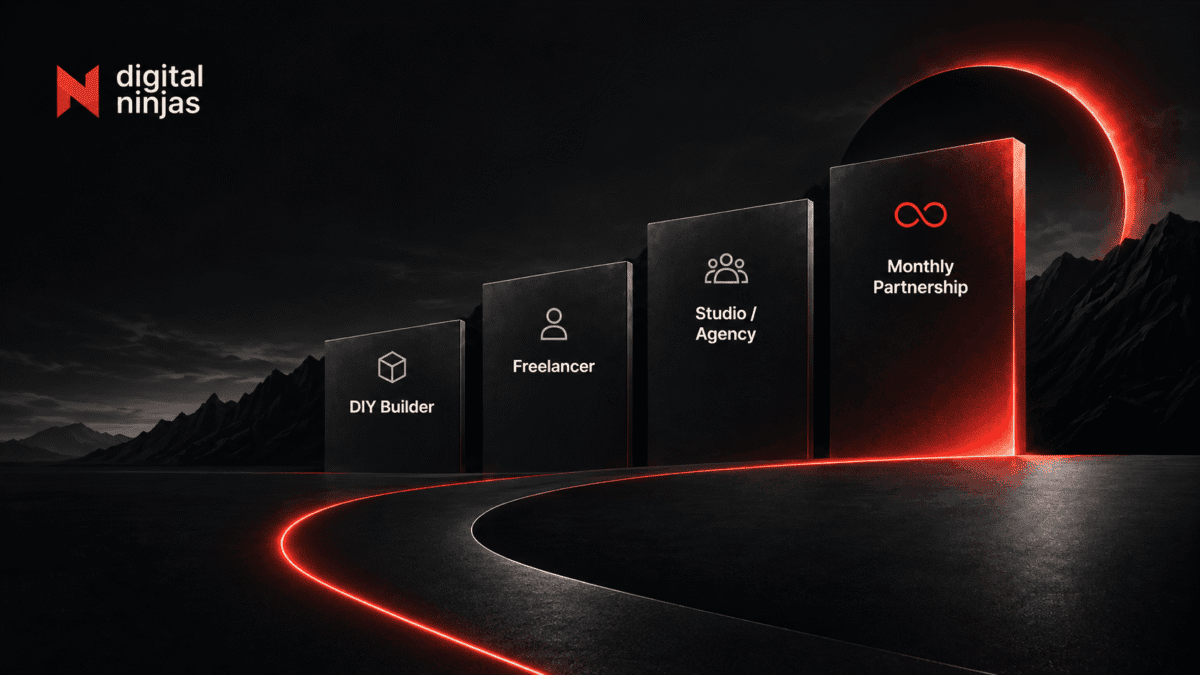
There are DIY builders, freelancers, studios, agencies, and ongoing website partnerships, all at different price points.

We broke those options down separately in our guide to how much a website costs in 2026.

What matters is simpler: Pay for the website your business actually needs.

Not the cheapest one available, and not the biggest one somebody can sell you.

Does every small business need a website immediately?

Not necessarily.

A brand-new business can sometimes validate an idea through a marketplace, social profile, landing page, or Google Business Profile before investing in a larger website.

There is nothing wrong with starting small.

But as the business becomes more established, the limitations of relying entirely on third-party platforms usually become more noticeable.

You need somewhere to explain the offer properly, and you need pages people can find through search.

You need somewhere for referrals to verify you.

You need more control over what happens between discovery and enquiry.

That is usually when the business website benefits become less theoretical and much more practical.

Business Website FAQs

Does a small business still need a website in 2026?

For many established small businesses, the benefits of a business website include having a central place to explain services, establish credibility, appear in search, support marketing campaigns, and turn interest into enquiries.

A very new business may start with a simpler online presence first. The right time to build depends on how customers discover and evaluate the business.

The benefits of having a website for your business become more noticeable once customers need more information, proof, or clearer next steps than a social profile can provide.

Is social media enough for a small business?

Social media can be enough during the earliest stages of some businesses, particularly when most sales come directly through a platform.

The trade-off is control. Your profile, reach, features, and visibility depend on that platform. A website gives you a digital presence you can structure around your own customer journey and connect with other channels.

What should a small business website include?

At minimum, visitors should be able to understand who you are, what you offer, who you help, and how to contact you.

Depending on the business, that might mean a homepage, individual service or product pages, an About page, testimonials or case studies, FAQs, and a clear contact or booking process.

You do not need pages simply to make the website look bigger. Every page should have a job.

How much does a small business website cost?

There is no single standard price. Cost depends on who builds it, the number of pages, design requirements, content, functionality, SEO, integrations, ecommerce needs, hosting, and ongoing support.

Our full 2026 website cost breakdown compares DIY builders, freelancers, agencies, and monthly website partnerships in more detail.

A website should make doing business with you easier

The strongest benefits of a business website are not really about having another piece of marketing technology.

They are about reducing friction, making the business easier to find, the offer easier to understand, your work easier to verify, and making the next step easier to take for your potential customers.

If your current website does not do those things, adding more pages probably is not the answer. It may simply need clearer thinking behind it.

Editor’s Note: This post was originally published in May 2021 and last updated September 2026.
Categories
Web Design

How Much Does a Website Cost in 2026? An Honest Breakdown

How much does a website cost in 2026? For a small business, it can mean anything from a low monthly platform fee to a five-figure professional build once design, content, SEO, integrations, and support are included.

The number itself is not the hard part. Comparing quotes is.

A $2,000 website and a $10,000 website may both have five pages and look perfectly respectable in a screenshot. But what went into those five pages can be completely different.

We build websites for a living, so yes, we know what we’re talking about. That’s also why we’d rather show you what you’re actually paying for rather than give you the usual answer of “it depends.”

How much does a website cost for a small business?

The question “how much does a website cost?” doesn’t have one useful number. The buying model changes what you’re actually paying for.

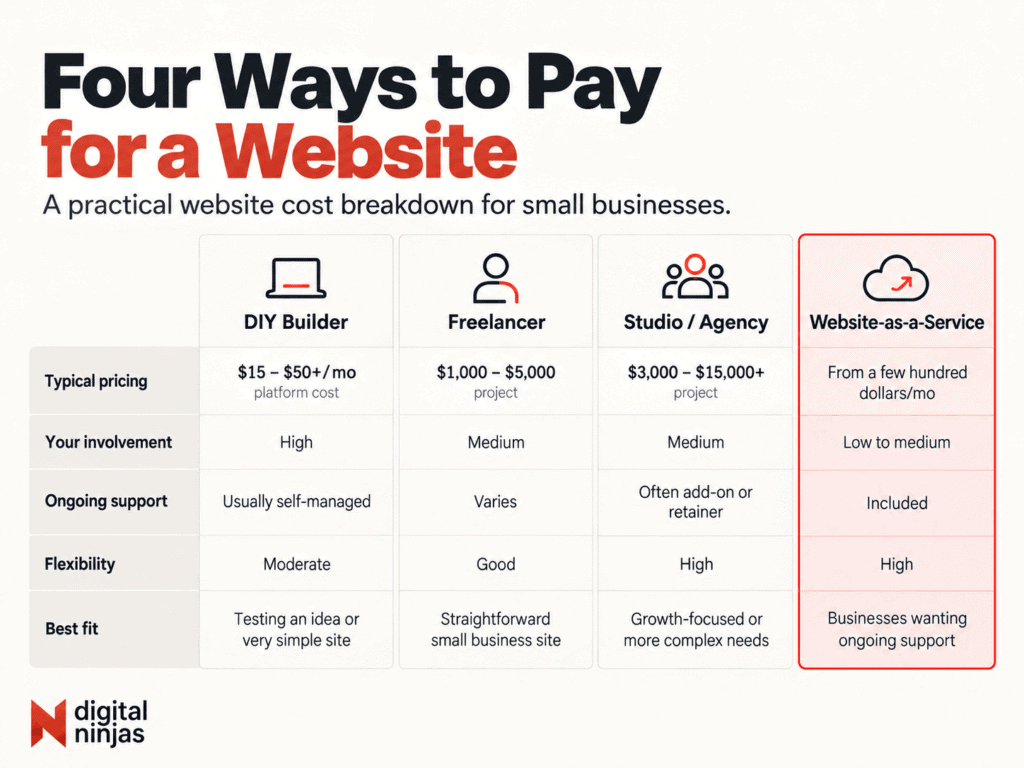
For a typical small business, there are four common ways to pay for a website:

Four ways to pay for a website v2 min

DIY website builders: roughly $15 to $50 a month

Wix, Squarespace, Shopify, WordPress.com, and similar platforms let you start without hiring a developer.

For a typical paid business plan, expect roughly $15 to $50 a month. Entry-level plans can cost less. E-commerce, advanced features, extra apps, and higher-tier plans can push the cost much higher.

The important distinction is that this is mainly the platform cost, not the value of the time you spend building the website, which is something business owners often forget to factor in.

If it takes you 40 hours to choose a template, write the copy, resize images, configure forms, learn the editor, and fix everything that looks strange on mobile, those hours are part of your website cost too.

DIY platforms also aren’t automatically bad for SEO. Most major builders now give you access to the basics, such as page titles, descriptions, redirects, structured data, and other search settings.

The catch is that having the tools and knowing how to use them are two different things.

A builder can give you a field for a title tag. It won’t decide what your site architecture should be, which searches matter to your business, how your service pages should be structured, or what content deserves its own page.

DIY makes sense when you’re testing an idea, running a very simple business, or genuinely have more time than budget.

Just go in knowing which one you’re spending.

Freelancers: roughly $1,000 to $5,000

A good freelancer can be excellent value, especially for a straightforward small business website.

You get someone to handle the technical work without paying for a larger team or agency structure. For many businesses, that’s enough.

The challenge isn’t finding someone with a nice portfolio. It’s figuring out what happens outside the portfolio.

Ask questions like:

  • Will I review the website on a staging site before it goes live?
  • Who owns the domain, hosting, accounts, and finished website?
  • Is copywriting included, or do I provide all the content?
  • What SEO work is actually part of the build?
  • What happens if something breaks after launch?
  • Who handles updates six months from now?

A cheap quote with clear answers can be a better deal than an expensive quote with vague ones.

The problem starts when you discover halfway through the project that “website design” meant putting your content into a template, while everything else costs extra.

Studios and agencies: roughly $3,000 to $15,000+

Once a project needs more than a basic build, pricing starts climbing.

You’re usually paying for a broader process: planning, design, development, content structure, technical setup, testing, launch support, and some level of project management.

Website costs can rise quickly when the project involves custom functionality, large amounts of content, e-commerce, integrations, migrations, or deeper SEO work.

At this level, don’t judge the quote by the number of pages alone.

A five-page site with custom positioning, original copy, keyword research, conversion planning, CRM integration, analytics, and performance testing is not the same project as five pages assembled from supplied text and a premade theme.

Location affects the invoice too.

Studios in different countries operate with different salaries, overhead, and local market rates. A remote team can sometimes offer comparable expertise at a lower cost than an agency operating in a high-cost city.

That doesn’t make offshore automatically better or local automatically overpriced.

Compare the actual work, the people doing it, the process, the ownership terms, and what happens after launch.

Website-as-a-Service: from a few hundred dollars per month

There’s another model that doesn’t fit neatly into the traditional “pay once for a website” approach.

Website-as-a-Service, or WaaS, combines the website with ongoing services under a monthly fee.

Instead of paying a large amount upfront for the build, you pay a recurring monthly fee that’s bundled with services such as hosting, maintenance, SEO, content, reporting, and ongoing support.

That makes the upfront cost easier to manage, but the right comparison isn’t just the monthly price. Look at the total commitment, what’s included, what happens after launch, and who owns the website if the agreement ends.

This model can make sense for businesses that want an ongoing digital partner rather than a one-time build.

What actually makes one website cost more than another?

If you’re starting with the question “how much does a website cost?”, page count alone won’t give you a useful answer.

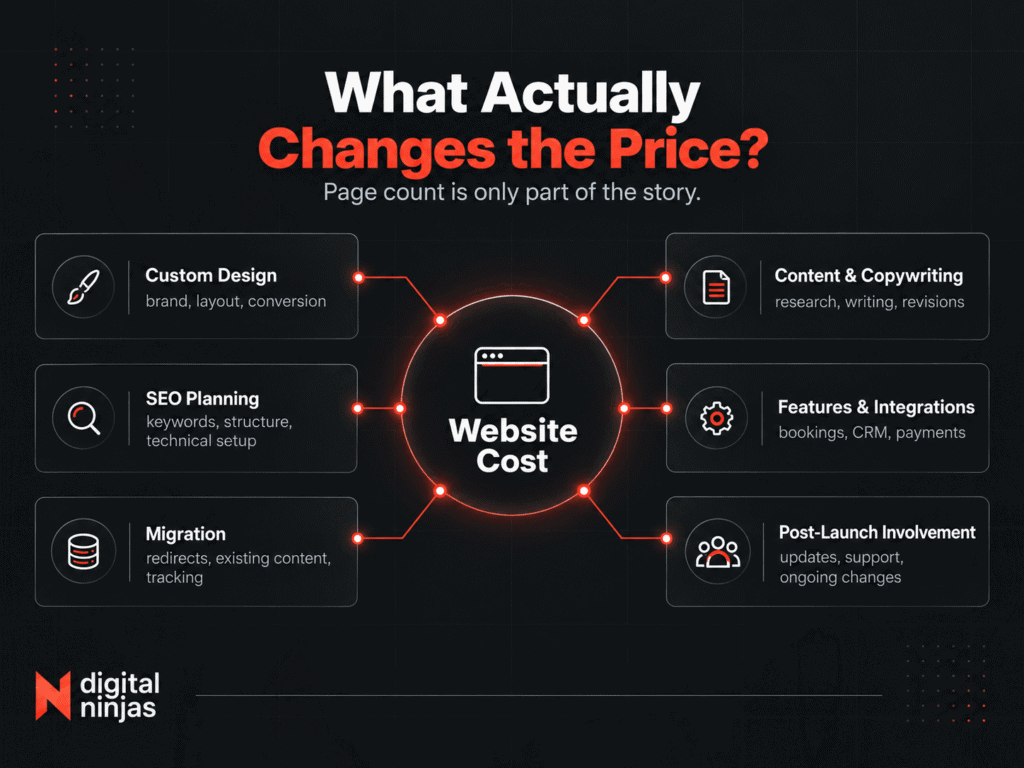
Two businesses can both ask for a five-page website and receive completely different prices because page count is only one part of the job.

What actually changes the price v2 min

Custom design vs. adapting a template

Starting with an existing theme is faster.

Designing around your brand, content, audience, and conversion goals takes more time.

Neither approach is automatically wrong. You just shouldn’t pay custom-design prices for a lightly edited template.

Content and copywriting

Someone has to write the content for the website.

If you’re supplying polished final copy, the project costs less.

If the team needs to research your audience, clarify your positioning, plan each page, write the copy, revise it with you, and optimize it for search, that’s a separate body of work.

This is one of the most common things left unclear in website proposals.

SEO planning

“SEO included” can mean almost anything.

Sometimes it means installing an SEO plugin and filling in metadata.

A more involved SEO scope may include keyword research, competitor analysis, page mapping, internal linking, technical checks, redirects, structured data, Google Search Console setup, and planning content around actual search demand.

Ask what’s included instead of relying on the label.

If you want a baseline for what search-friendly fundamentals actually look like, Google’s SEO Starter Guide is a useful reference.

Features and integrations

A brochure website is usually simpler than a site that needs bookings, payments, membership features, a product catalog, CRM integration, lead automation, multilingual content, or custom workflows.

Every external system adds something that needs to be configured, tested, and maintained.

Migration

Replacing an existing website can be more complicated than launching a brand-new one.

You may have old URLs that already rank, years of blog content, analytics setups, forms, tracking scripts, customer data, or integrations that shouldn’t disappear during the move.

Migration work is often invisible when everything goes right.

That’s exactly why it matters.

How involved you want to be after launch

Some businesses want the keys and prefer to manage everything internally.

Others don’t want to think about hosting, updates, website changes, content, or SEO after launch.

Those are different services, so they should have different prices.

Want to see what Digital Ninjas includes instead of comparing vague quotes? View our website plans.

Don’t forget the costs after the website launches

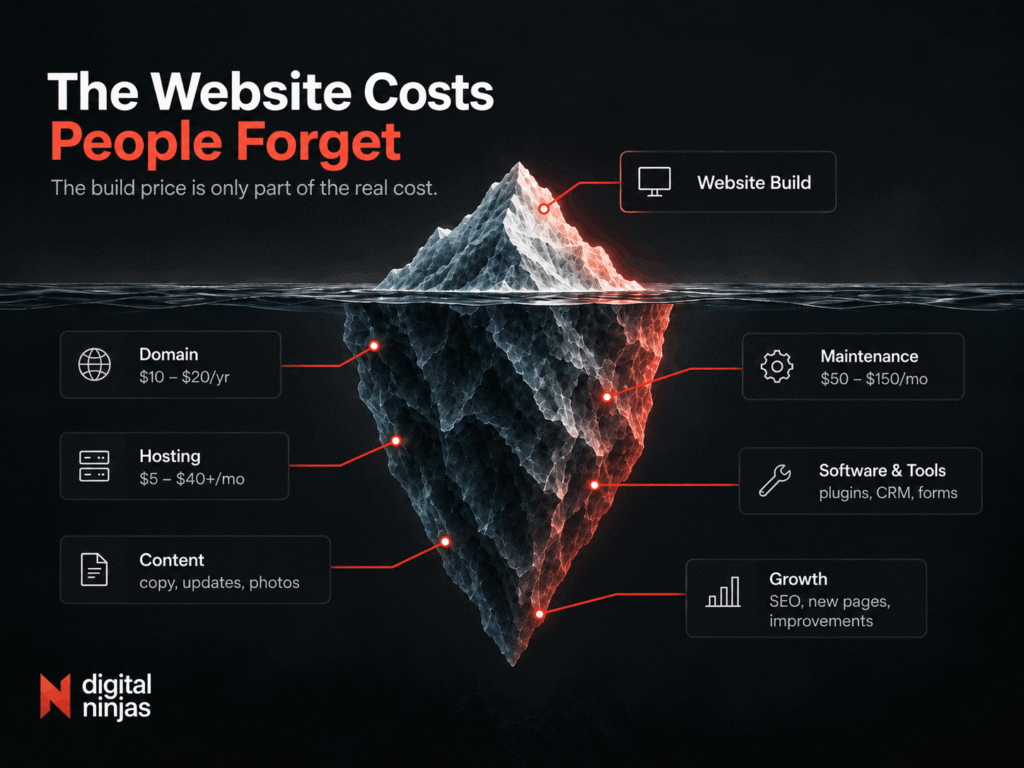
The initial build gets most of the attention when businesses compare website costs, but it isn’t necessarily the last number you’ll pay.

The website costs people forget v2 min

Domain

A normal domain usually costs a relatively small amount each year, although premium names and some extensions can cost considerably more.

The important part is ownership. Your business should control its domain account.

Hosting

Basic shared hosting can be inexpensive. Managed hosting, higher-performance infrastructure, e-commerce hosting, or larger applications cost more.

Don’t compare hosting on price alone. Reliability, support, backups, security, and performance matter too.

Maintenance and support

Software changes. Browsers change. Plugins change. Content gets outdated. Things occasionally break.

Some businesses handle maintenance internally. Others pay a monthly care plan or ongoing support agreement.

Ask about this before launch, not after something stops working.

Content

A finished website is not necessarily finished marketing.

If search visibility matters, you may need new service pages, case studies, landing pages, articles, updated photography, or other content over time.

That isn’t a flaw in the website. A growing business rarely stays exactly the same after launch. Your website needs to keep up.

Third-party tools

Booking systems, email platforms, premium plugins, analytics products, CRMs, form tools, and other software may have their own subscriptions.

Make sure you know which ones are included in your website quote and which ones you will pay directly.

When is a monthly website plan worth it?

A monthly website plan makes the most sense when you need more than a website launch.

If your business also needs hosting, maintenance, content updates, SEO work, reporting, and someone available when something needs fixing, bundling those services into one monthly plan can be simpler than hiring different people for each job.

The key is to compare the total cost and total scope, not just the first invoice.

A $3,000 website paid upfront may look cheaper than a $499 monthly plan. But if you later add hosting, maintenance, SEO, content, support, and ongoing improvements, you’re no longer comparing the same service.

At Digital Ninjas, our Website-as-a-Service plans currently start at $499 per month plus a $250 setup fee, with a 12-month minimum. The Starter plan combines the website build with hosting, SEO foundations, ongoing content, maintenance, reporting, and support.

That model can be a good fit if:

  • your website is expected to generate leads rather than simply exist
  • you don’t have an internal person handling updates and technical issues
  • SEO and content are part of your long-term marketing plan
  • you prefer predictable monthly costs over separate invoices
  • you want the site to keep improving after launch

A traditional one-time build may make more sense if your needs are simple, you already have people handling SEO and content, or you’re comfortable maintaining the site internally.

Whichever model you’re considering, check the contract before comparing prices.

Ask:

  • How long is the commitment?
  • What work is included each month?
  • Are hosting and maintenance included?
  • Who owns the website and content?
  • Can the website be moved if the agreement ends?
  • What happens when you need work outside the monthly scope?

Those answers matter just as much as the monthly fee. They should be clear before you sign anything.

The cheapest-looking option isn’t always the lowest website cost over time. The better comparison is what you’re paying for, how much work your team still has to handle, and whether the arrangement fits the way your business plans to use the site.

So what should you actually spend on a website?

When you’re asking “how much does a website cost?”, it also helps to ask what you expect that website to do for the business.

Start with the job the website needs to do.

If you mostly need somewhere credible to send referrals so they can check your services and contact you, you may not need a complex build.

If the website is expected to generate leads, support search visibility, publish content regularly, integrate with your sales process, and become a serious acquisition channel, the scope changes.

So does the budget.

One useful question is:

If this website generated one additional good client each month, what would that be worth to the business over a year?

That doesn’t mean you should blindly spend that amount.

It gives you a better reference point than comparing every proposal with the cheapest quote in your inbox.

There’s also nothing wrong with starting lean.

A new business can begin with a focused site and expand when the demand is there. The important part is choosing a setup that won’t make every future improvement unnecessarily difficult.

If you’re still deciding whether your business needs a dedicated website in the first place, read our guide on why a business website still matters.

Website Cost FAQ

Can I get a professional website for under $1,000?

Yes, but the scope will usually be limited.

At that budget, you’re more likely to get a template-based site, a small number of pages, or a tightly defined build from a freelancer. Custom strategy, copywriting, deeper SEO work, complex integrations, and ongoing support may cost extra.

Before choosing based on price alone, ask exactly what’s included and what you’ll need to provide yourself.

How long does it take to build a small business website?

It depends on the scope and how ready the content is.

A straightforward small business website can take a few weeks, while a larger custom site may take several months. Content, feedback, integrations, and approval rounds often affect the timeline just as much as the actual development work. Current web-design guides commonly place simpler business sites within a several-week range, with more complex projects taking longer.

Ask for a realistic project timeline before work begins, including what your team needs to provide and when.

Do I own my website after it’s built?

That depends on the agreement, so check before signing.

Ask who owns the domain, website content, design assets, code, and hosting account, and what happens if you stop working with the provider.

With Digital Ninjas, the content, design, and work created for the client belongs to the client. For Website-as-a-Service plans, content can also be exported and handed over if the service ends after the agreed terms.

How much does a website cost to maintain each year?

For a simple small business website, the basic recurring costs can stay in the hundreds of dollars per year if you handle most maintenance yourself.

Professional support, premium tools, content creation, SEO, hosting, and regular improvements can push the annual cost into the thousands.

The important distinction is whether you’re budgeting only to keep the website running or paying someone to keep improving it.